Cooking With Toddlers: What a 2-Year-Old Can Really Do in the Kitchen
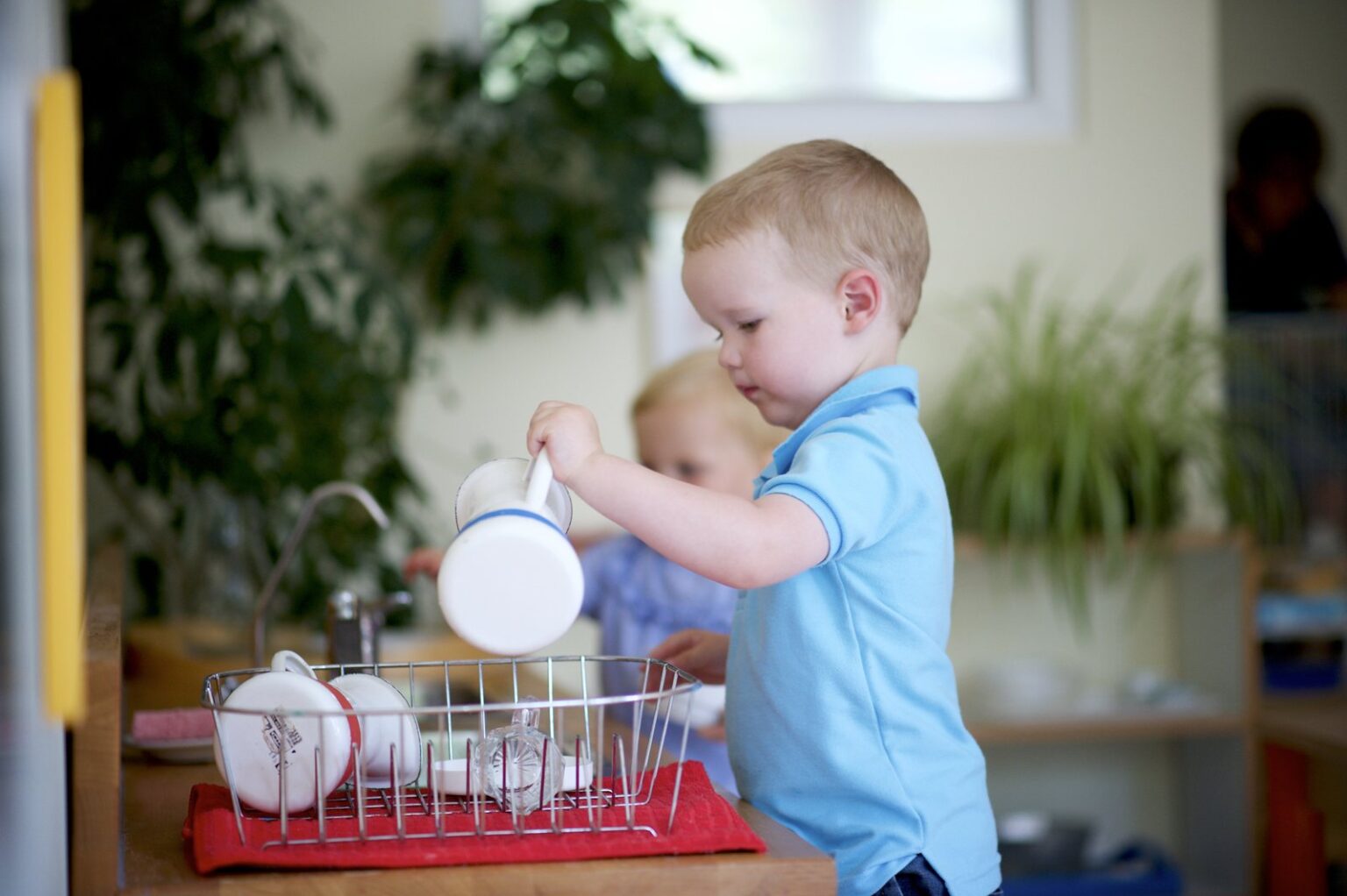
A 2-year-old can do real work in the kitchen: scrub vegetables, cut a banana, pour their own water, whisk batter and spread butter on a cracker. Start with one job, set it up at their height with small real tools, and show them how, slowly, with your hands and very few words. Pick a time when you both have the energy for it, and expect some mess.
My toddler is always underfoot while I cook. What does that mean?
A toddler who keeps tugging at your legs while you chop onions usually wants to be with you and feel part of what you’re doing. What often helps is a small real job right next to you.
What can a 2-year-old actually do in the kitchen?
Here are five jobs to start with. Pick one, show them a few times, and add the next when your child is ready.
1. Washing and scrubbing vegetables. A bowl of water, a small brush and a few potatoes or carrots. It’s a good first job, and the vegetables go straight into your dinner.
2. Cutting a banana. Half a banana on a small board and a butter knife. Show your child how to push the knife straight down instead of sawing. Firmer food like carrots, and a small sharp knife, come later.
3. Pouring their own glass of water. A small clear pitcher with just a little water in it, a real glass and a tray underneath to catch spills. Then let them drink what they poured.
4. Whisking batter. Give your child their own small bowl and fork while you whisk in yours. It takes longer and there’s more to clean up, but your child is practicing coordination and following a few steps at a time.
5. Spreading butter on a cracker. Bread tears easily, so start with a small spreader and a firm cracker your child can hold in one hand. Butter, jam or a thin layer of nut butter all work.
Is it safe to give my 2-year-old a knife?
With a butter knife, soft food and you right next to them, yes. Show your child how to hold the knife and where their other hand goes, and stay with them the whole time they use it.
Charlotte Snyder, who teaches our Montessori Practice at Home course, recommends a real knife over a plastic one, and explains why: “But if this is a plastic knife, if they hold onto the blade, nothing is going to happen.” So your child learns that grabbing a blade is fine, and that habit stays with them when they later use a real knife. A real table knife or butter knife teaches them the right way to hold it from the start.
How do I show my toddler what to do?
Slowly, with both hands, and with very few words. Your child watches your hands and copies what they do. It’s hard for a toddler to follow your words and your hands at the same time, so talk before or after you show them, and stay quiet while your hands are moving.
Before you start, put a sponge and a small cloth within reach, so you can wipe up a spill together right away.
Do I need special equipment or a play kitchen?
You don’t need much to start. A sturdy step stool or learning tower that doesn’t tip lets your child stand safely at the counter. Your child wants to do what you do, in your kitchen, with real, child-sized things like a small glass and a small plate. Give them one low drawer or shelf where their things live, so they can get them on their own.
What if I have to cook dinner on a busy weeknight?
Then keep it small. Junnifa Uzodike, who co-wrote The Montessori Kitchen, talked about exactly this in a ChildhoodPotential.Club LiveTalk. On a weeknight after a long day, she said, helping might simply be “them handing you tomatoes as you chop them.” Or your child might sit in a corner sorting silverware into containers while you cook.
Save the bigger jobs for days when you have more time, when your child is rested and in a good mood, and when you feel up to some mess.
Is there a video I can watch about everyday Montessori at home?
In this short Q&A video, Ferne van Zyl answers parents’ questions about everyday skills, potty training and Montessori in general.
Her full talk, with videos of toddlers cutting and pouring, is on ChildhoodPotential.Club: Me Do It! The Joy of Learning for Toddlers in the Kitchen.
Is there a course on doing this at home?
Yes. Our Montessori Practice at Home course with Charlotte Snyder is for parents of 2- to 6-year-olds who want to bring everyday Montessori into their home, and preparing food together is part of it.
Related articles:
Montessori Practice
at Home
AN ONLINE COURSE FOR PARENTS
OF CHILDREN AGED 2 TO 6
Bring Montessori into your daily life with hands-on activities that support your child’s development.
 The Power of Letting Children Do Things Themselves
Have you ever watched a toddler trying to button their coat, even…
 How to Travel with Young Children - the Montessori Way
Traveling with little ones is never boring, right? Whether you’re headed to…
 10 Fascinating Facts About the Life of Maria Montessori
Maria Montessori, a name synonymous with child-centered education, was not only a…