What Are Three-Part Cards and How Can You Use Them?
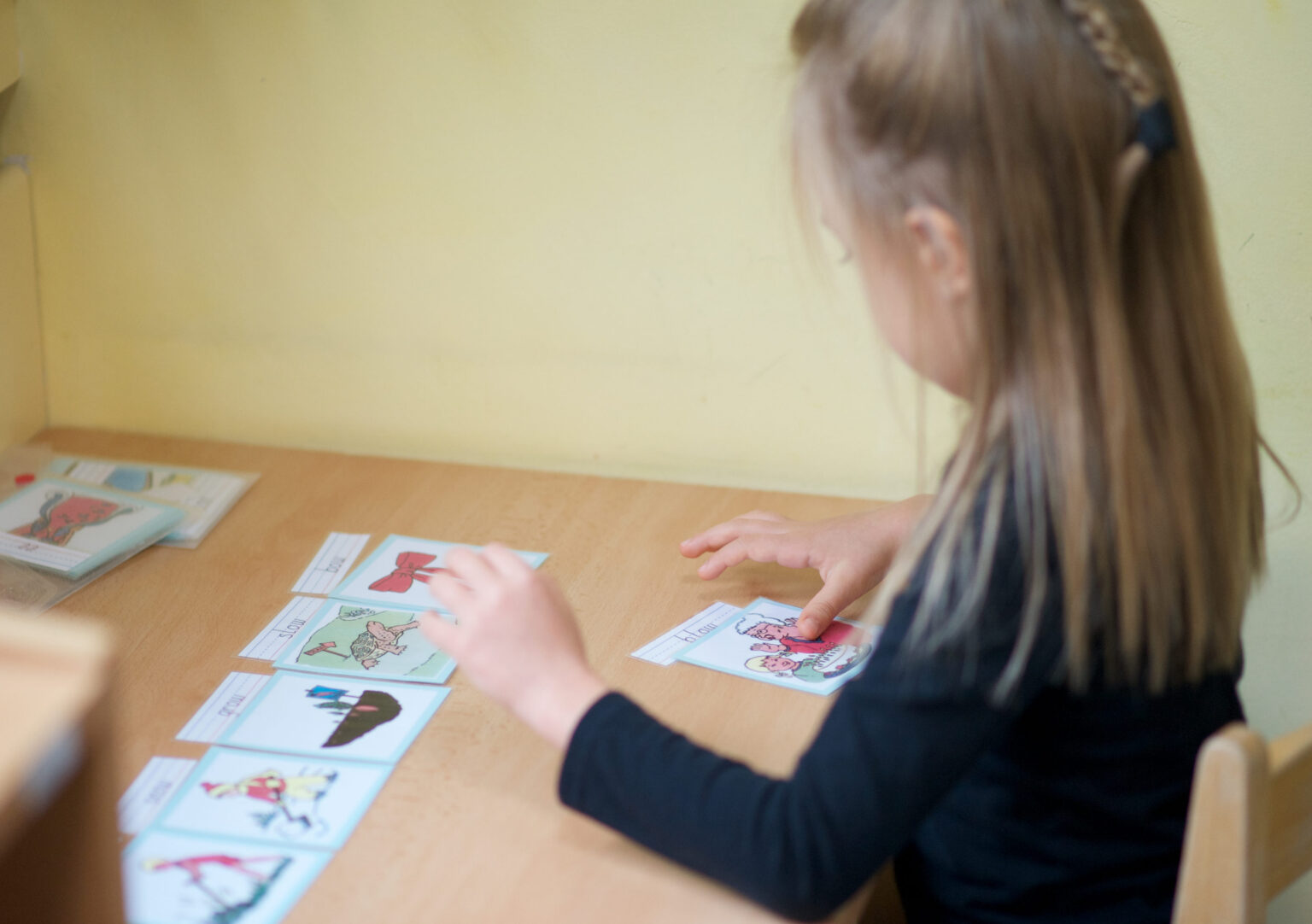
As the name suggests, three-part cards consist of three separate parts: a picture card, a label card with text only, and a control card that combines both the picture and the text. The control card allows the child to check their own work and correct mistakes independently, without the help of a parent or teacher.
Let’s take forest animals as an example. One set of cards would contain realistic pictures of animals such as a deer or a wild boar. The second set would include small labels with only the names of the animals, which the child can match to the pictures. The third set contains both the picture and the matching label together.
The topics of the cards can easily change depending on the child’s interests or the season and themes you are exploring together.
It is important that the images used on the cards are as realistic as possible. Ideally, use photographs. If illustrations are used, they should closely resemble the real object or animal. Whenever possible, it also helps to place the object on a white background. This helps isolate the child’s attention and makes it easier to focus on the specific item being presented.
For very young children, you can begin with picture cards only, without written labels. Simply naming the object helps expand the child’s vocabulary. It is best not to introduce more than three new concepts at once. Young children can use these cards to learn the names of familiar objects they encounter in daily life. For example, you might prepare sets focused on kitchen items, vehicles, or domestic animals.
Older children can work with more advanced themes, such as continents, plant species, or more detailed animal classifications. Instead of broad categories like “insects” or “mammals,” you can introduce different types of birds, dog breeds, and so on.
You can also use three-part cards to introduce parts of animals, plants, or everyday objects. Just as children can learn the correct names of objects, they can also learn the names of their individual parts. Think about a car, many children would love the opportunity to learn the exact names of all its parts! While it is always best for children to first experience real objects in the real world, the cards allow them to explore and revisit the details calmly and with focused attention.
Children who are beginning to show interest in letters, reading, and writing can also use these cards as an early reading activity. They match the label cards to the picture cards, while the control cards help them check their own work.
There are two basic ways to use the cards. One option is to lay out the control cards (picture + label) on a mat, and then have the child match the separate picture cards and label cards to them. In this case, the child does not need to know how to read yet – they are simply visually matching the text. This can also help them gradually become familiar with written words.
The second option is to lay out only the picture cards and have the child match the text labels independently. This approach requires the child to read the labels in order to pair them correctly. Afterwards, the child can use the control cards to check their work.
Below, you can download two sample sets of language cards. Print the file twice, and in one copy simply cut apart the labels and pictures to create all three sets: picture cards, label cards, and control cards.

Montessori Beginnings
YOUR ULTIMATE
MONTESSORI PARENTING COURSE
FOR ZERO TO THREE
Gain clarity and confidence in your parenting to raise a resilient, independent and joyful child.
 The Quiet Flame of Concentration: The Stillness That Builds the Child
When we think of a child’s freedom in Montessori, we might imagine…
 The Discipline That Grows from Within
The Hidden Roots of Discipline When we think of a well-behaved child,…
 The Power of Letting Children Do Things Themselves
Have you ever watched a toddler trying to button their coat, even…